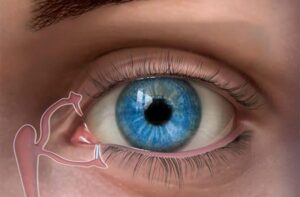
Demodex blepharitis is a common but often overlooked cause of eyelid irritation, itching, redness, and recurrent styes. Many patients struggle with these symptoms for years before discovering that microscopic Demodex mites are contributing to their discomfort. At Modern Vision Solutions, we diagnose and treat this condition with targeted, effective options designed to relieve symptoms and improve long-term eyelid health. This article will explain what Demodex blepharitis is, outline available treatment methods, and highlight why XDEMVY is a breakthrough therapy for many patients. To find out whether this treatment is right for you, schedule an appointment with Modern Vision Solutions for a consultation.
What Is Demodex Blepharitis?
Demodex blepharitis is a chronic eyelid condition caused by demodex mites that live in the hair follicle and produce tell-tale cylindrical debris known as collarettes. This form of Blepharitis is linked to demodex mite infestation in the lash follicles, where the mite activity can lead to itching, burning, eyelash loss, irritation, and persistent erythema. Many patients experience these signs and symptoms for years without a clear diagnosis because the collarettes at the lash base are easy to overlook unless a clinician is specifically evaluating for them. Research now shows that Demodex mites are associated with more than two-thirds of blepharitis cases in the United States, and that over half of patients in US eye care clinics have collarettes, the pathognomonic sign of Demodex blepharitis. Modern Vision Solutions evaluates for these findings during a slit-lamp exam to pinpoint the root cause of a patient’s symptoms and develop an appropriate treatment plan.
Why Does Demodex Blepharitis Happen?
Demodex blepharitis develops when demodex infestation increases in the lash follicles, often affecting both hair follicles and the sebaceous gland along the lid margin. As part of a broader ocular demodex infestation, the mites feed on skin cells and glandular oils, leading to chronic ocular surface inflammation and secondary issues such as conjunctivitis, keratitis, and worsening inflammation in patients with existing rosacea. The presence of bacteria in the biofilm along the lashes may worsen symptoms, creating a cycle of redness and irritation that does not resolve with basic hygiene alone. Patients often assume these symptoms are due to allergies or dryness, but a closer evaluation at Modern Vision Solutions can help determine whether demodex blepharitis is actually the driving factor.
Common Signs and Symptoms of Demodex Blepharitis
The signs and symptoms of this condition usually include:
- Persistent itching at the lash line
- Collarettes or sleeve-like debris around each eyelash
- Burning or foreign-body sensation
- Morning crusting or increased debris
- Redness or erythema along the lid margins
These symptoms are highly suggestive of ocular demodex and often become more noticeable over time. Modern Vision Solutions assesses these patterns carefully during an exam to determine whether treatment specifically targeting demodex mites is needed.
Traditional Treatment Approaches for Demodex Blepharitis
Traditional therapies for demodex blepharitis aimed to reduce mite load and manage inflammation, but they rarely achieved long-term results. Before the advent of targeted medication, clinicians relied on daily lid hygiene such as warm compresses, lid scrubs, microblepharoexfoliation, and occasional use of tea tree oil–based products. Adjunct treatments such as oral or topical ivermectin, metronidazole, or antibiotic-steroid combinations were sometimes used when there was significant inflammation, keratitis, or associated Rosacea. While these options could provide temporary relief, recurrence was common because the demodex infestation was not completely eliminated. Modern Vision Solutions uses this information to help patients choose treatment options that work better than hygiene alone.
What Makes XDEMVY a Breakthrough Treatment?
XDEMVY is the first Food and Drug Administration–approved medication specifically designed to kill demodex mites rather than just reducing their activity. This ophthalmic drop contains lotilaner 0.25%, a targeted treatment molecule that selectively affects mite neural channels while sparing human receptors. XDEMVY is a sterile, preserved, multi-dose ophthalmic solution designed for safe use around the delicate tissues of the eye, making it a meaningful advancement for patients who have struggled with long-term blepharitis. Modern Vision Solutions often recommends XDEMVY for confirmed demodex cases because its mechanism directly addresses ocular demodex infestation at the source.
How XDEMVY Works
XDEMVY works by directly targeting the mites that cause demodex blepharitis, which helps stop the irritation at its source. The medication affects the mites in a way that prevents them from surviving and reproducing, allowing the lashes and skin around the eyes to recover. By reducing the number of mites in the hair follicles and glands along the eyelid, XDEMVY helps clear collarettes, redness, and other symptoms that have not improved with regular lid hygiene alone. Many patients begin to notice steadier relief because the treatment focuses on eliminating the root cause rather than only managing discomfort.
How to Use XDEMVY: Dosing and Practical Guidance
XDEMVY is applied as one drop in each eye twice a day for six weeks. If you wear contact lenses, they should be removed before using the drops and can be put back in 15 minutes later. When using other eye medications, spacing them at least five minutes apart helps ensure each one works properly. If a dose is accidentally missed, you can simply continue with the next scheduled dose without starting over. Modern Vision Solutions makes sure every patient understands exactly how to use the drops so treatment feels simple and stress-free.
What the Clinical Trials Showed
Clinical trials showed that XDEMVY was much more effective than placebo in reducing collarettes, lowering mite counts, and improving eyelid redness. Many patients reached complete or near-complete clearing of the debris around their lashes after six weeks, and follow-up exams showed that these improvements often lasted well beyond the treatment period. The studies also demonstrated that most patients tolerated the medication well, with only mild, temporary stinging reported by a small number of participants. These findings give patients confidence that a single treatment course can provide meaningful and lasting improvement.
How XDEMVY Fits into a Complete Treatment Plan
XDEMVY is now commonly used as the first prescription treatment for confirmed Demodex blepharitis because it directly targets the mites causing the condition and is currently the only FDA-approved therapy for this disease. Gentle daily lid hygiene is often continued during and after the treatment to support healthy gland function and maintain clean eyelid margins, but patients usually do not need the harsher products used in the past. If you have additional concerns such as rosacea, meibomian gland issues, or recent eye surgery, Modern Vision Solutions can tailor your plan so everything heals properly. The main goal is to break the cycle of infestation and irritation so symptoms do not keep returning.
Ready to Restore Comfort?
Demodex blepharitis can be exhausting to deal with, especially when home treatments have not provided long-term relief. XDEMVY offers a way to address the underlying cause and calm the irritation that affects your daily comfort. Modern Vision Solutions works closely with every patient to create a treatment plan that fits their symptoms, lifestyle, and eye health needs. To move toward clearer, more comfortable eyes, schedule a consultation with Modern Vision Solutions today.
https://ir.tarsusrx.com/news-releases/news-release-details/fda-approves-xdemvytm-lotilaner-ophthalmic-solution-025
https://www.aaojournal.org/article/S0161-6420%2823%2900392-5/fulltext
https://pubmed.ncbi.nlm.nih.gov/35965392/
https://pubmed.ncbi.nlm.nih.gov/39873946/
https://pmc.ncbi.nlm.nih.gov/articles/PMC11311291
https://journals.lww.com/corneajrnl/fulltext/2024/11000/long_term_outcomes_of_6_week_treatment_of.7.aspx

Dr. Meagan Anderson is the lead optometrist at Modern Vision Solutions in Omaha, NE. She completed her Residency in Refractive Surgery and Primary Care and holds a Doctor of Optometry degree from the University of Missouri – St. Louis College of Optometry St. Louis, MO. She is a member of the American Optometric Association, American Academy of Optometry, and the Nebraska Optometric Association. Dr. Anderson has had experience in multiple refractive surgery and optometry practices. She has served as a teaching assistant in Clinical Optometry I, II, & III courses. Our patients love her incredible empathy.