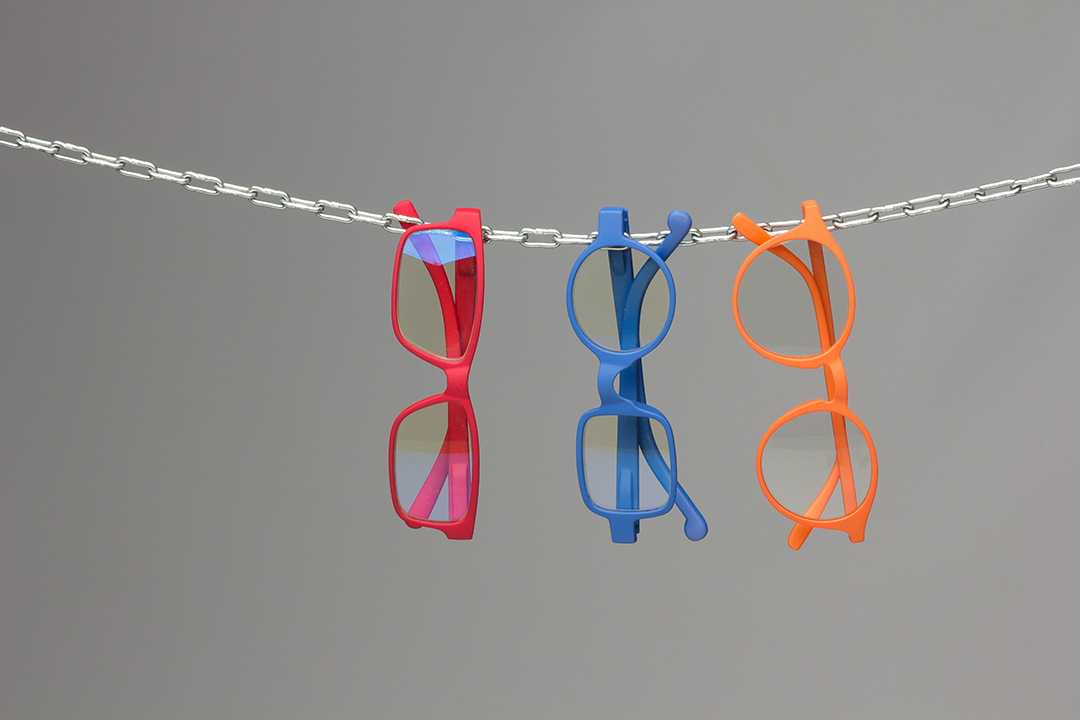
Choosing between progressive lenses and bifocals can be confusing if you’re not sure what sets them apart. At Modern Vision Solutions, we work with patients every day who are weighing their options for clear vision at multiple distances. Both types of lenses can correct presbyopia and other age-related changes in eyesight, but the right choice depends on your lifestyle and preferences. In this article, we’ll explain the key differences and help you decide what makes the most sense for your needs. Schedule an appointment with Modern Vision Solutions to talk with an expert and find the best solution for you.
How do bifocals and progressive lenses work?
Bifocals and progressive lenses are both designed to address presbyopia, an age-related condition that affects the ability to focus on close-up objects. Bifocal lenses contain two distinct prescription zones—one for distance vision and one for near tasks like reading—divided by a visible line. Progressive lenses, by contrast, use advanced technology to offer a seamless transition between multiple focal zones, including distance, intermediate (such as for computer use), and near. This allows the human eye to switch between viewing distances more naturally, without the visible division found in bifocals.
What are the key differences between progressive lenses and bifocals?
The most obvious difference is cosmetic—bifocals have a visible line, while progressive lenses do not. But there are functional differences, too. Bifocals only provide two fields of vision: near and distance. Progressives offer three or more zones, improving visual acuity for tasks at a variety of ranges.
Bifocals vs. Progressives Comparison Table
| FEATURES | BIFOCALS | PROGRESSIVES |
| Visible Line | Yes | No |
| Number of zones | 2 (near + distance) | 3 (near+intermediate+distance) |
| Aesthetics | Noticeable line, traditional look | Modern, indistinguishable from regular lenses |
| Adaptation Period | Quick adaptation for most | May require days or weeks |
| Peripheral Distortion | Minimal | Possible, usually temporary |
| Cost | Less expensive | Typically more expensive |
| Digital Device Use | Not optimal (lacks intermediate distance) | Well-suited (has intermediate distance) |
| Image Jump | Common | None |
What are the pros and cons of each option?
Progressive Lens
Pros:
- Seamless vision at all distances—reading, computer, distance
- No visible line
- Better for multitasking and modern lifestyle needs
Cons:
- Higher cost
- Adaptation period with possible temporary eye strain, blurred vision, or “swim” effect
- Slight peripheral distortion
Bifocals
Pros:
- Easy to adapt
- Budget-friendly
- Great for those needing correction only for near and distance
Cons:
- No support for intermediate space (problematic for computer monitor use)
- Noticeable line
- Sudden image “jump” can be uncomfortable
Which option fits your lifestyle better?
If you spend your day switching between screens, driving, and close-up tasks like reading or using a tablet, a progressive lens may be the better option. The design supports modern multitasking and looks more like regular eyewear. If you mainly need clear vision for two fixed ranges—say, watching TV and reading—and you want a more affordable solution, bifocals might be a better fit.
Choosing the right corrective lens also depends on your ability to adapt. Some patients find the adjustment to progressives more difficult, especially if they’ve been wearing bifocals for years.
Do progressive lenses cause visual distortion?
Yes, progressive lenses can cause some initial distortion as your brain learns how to process the different focal zones. Common issues include:
- Peripheral blurriness
- “Swim” effect or image warping during movement
- Narrower clear vision corridor
- Difficulty seeing the ground or steps clearly
These symptoms typically fade within one to two weeks as your visual system adjusts. Proper fitting and wearing the lenses consistently can speed up adaptation.
How do progressive lenses improve multitasking?
Progressives enhance visual perception by letting you view multiple distances without switching glasses. Whether you’re looking at a computer monitor, reading documents, or glancing across a room, you can do it all within one lens. In contrast, bifocals limit you to two distinct fields of view, making frequent switching between tasks more disruptive.
What makes progressives better for computer and reading use?
Progressive lenses are designed with a dedicated intermediate zone that makes them more comfortable for computer work and extended reading sessions. You don’t need to crane your neck to find the right prescription area. Bifocals, lacking this middle ground, can lead to headache, eye strain, or awkward posture during screen use.
What should I know before switching from bifocals to progressives?
Even if you’re used to wearing multifocal glasses, switching from bifocals to progressives requires an exam-based prescription adjustment and a short adaptation period. It helps to wear your new lenses full-time during the first week and avoid switching back to old glasses. The goal is to retrain your eye and brain to locate the correct zones naturally.
If you’re experiencing blurred vision or discomfort after a couple of weeks, visit our optometry team for an eye examination to check for fit or prescription issues.
How does the cost difference impact long-term value?
While progressive lenses cost more initially, they often provide better long-term value. You won’t need to carry multiple pairs of glasses or constantly switch between frames. Progressives also offer greater flexibility as your eyeglass prescription changes with age. In some cases, minor changes can be accommodated without needing new lenses right away.
Bifocals may have lower upfront costs, but frequent replacements due to fixed zones or outdated technology could increase your total investment over time. So while the higher price tag of progressives may seem steep, the incentive comes in the form of convenience, long-term usability, and better alignment with your evolving vision needs.
Ready to See Clearly at Every Distance?
Your experience with glasses should fit your life—not the other way around. Whether you need a vision solution for nearsightedness (myopia), farsightedness (hyperopia), or age-related visual impairment, the team at Modern Vision Solutions can guide you to the best fit. Schedule an eye examination with us to explore whether bifocals or progressive lenses are the right choice for your lifestyle. Visit our website or give us a call to book your appointment today.

Dr. Meagan Anderson is the lead optometrist at Modern Vision Solutions in Omaha, NE. She completed her Residency in Refractive Surgery and Primary Care and holds a Doctor of Optometry degree from the University of Missouri – St. Louis College of Optometry St. Louis, MO. She is a member of the American Optometric Association, American Academy of Optometry, and the Nebraska Optometric Association. Dr. Anderson has had experience in multiple refractive surgery and optometry practices. She has served as a teaching assistant in Clinical Optometry I, II, & III courses. Our patients love her incredible empathy.